Mold Odor Removal in Lakeland, FL
The house looks fine. There are no stains, nothing is soft, and the floors are dry. But the back bedroom smells like a wet beach towel every morning, worse on the humid days, and it fades by lunchtime once the air conditioning has caught up. Candles and plug-ins hide it for an hour. The room is on the low side of the lot, the side that held standing water for a week after the storm. This site connects you by phone with an independent local provider who does mold odor removal in Lakeland and across Polk County.
Following the smell to the wet material with a meter
The air gets treated last, never on the first visit. The crew walks the room and the rooms around it with a moisture meter, checking the bottom course of the outside wall, the floor under the laminate or carpet, the back of the closet, the cabinet floors in the nearest bath, and the slab edge from outside. A house that smells and looks fine almost always has wet material behind a finished surface, and in a slab house that material is low: the block, the bottom plate, the carpet pad, or the foam under a floating floor.
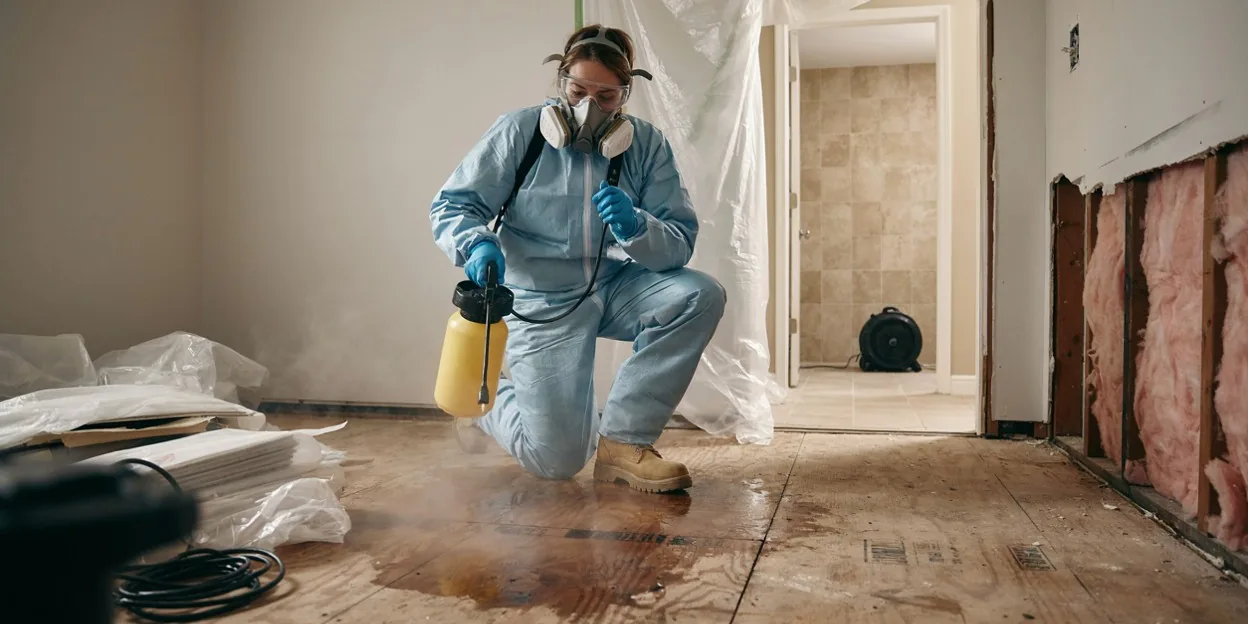
Once they find it, the work is ordinary removal. Containment, the wet material out, the framing and block cleaned and dried. Treating the odor comes last, because a deodorizer sprayed over a wet wall buys you a week.
Put the candles away and notice when the smell changes
Stop covering the smell for a few days so you can tell where it lives. Note whether it is stronger in the morning or the evening, whether it changes when the air conditioning starts, and whether it is worse after rain. Open the closet and smell the back wall at floor level. Open the cabinet under the nearest sink.
Walk the outside of the house after a storm and see where the water stands. If the laminate clicks or lifts anywhere, or the carpet feels cool along one wall, that is where to point the crew. Do not pull the floor or the baseboard up yourself.
What turns up, what comes out, and what finally treats the air
Typical finds in a Lakeland house: block that filled with yard water along a wall on the low side of the lot, a carpet pad that soaked up slab moisture and never dried, a dishwasher or icemaker line that wet the cabinet toe kick, or a shower pan in a 1970s bath that has been seeping into the wall for years. The wet material comes out inside containment, the block and framing are HEPA cleaned, and drying runs until the meter says dry.
Then the air and the surfaces get treated: a HEPA scrubber runs for several days, and the crew wipes or fogs the space with a product that breaks down the odor instead of masking it. If the smell turns out to ride the supply air, it is HVAC mold cleaning. When the wet material turns out to be behind a vanity, the job is bathroom mold removal. A find in the block is mold removal from there on. Closing the wall and relaying the floor falls under mold damage repair.
Low lots, sandy slabs, and air that will not dry a wall
Lakeland is built on sand ridges between lakes, and the lots that sit a few feet lower than the street hold water after any heavy rain. Ian's 10 to 15 inches in September 2022 and Milton's foot of rain in a day in October 2024 left yards in Lakeland Highlands, Combee, and the Lake Bonny basin under water for days, and a slab on a lot like that wicks moisture up into the block and the bottom plate long after the yard drains. A floating floor over that slab traps it.
The humidity does the rest. From May into October the outdoor air is wet enough that an open window adds moisture rather than removing it, and a wall that would dry in a week in a drier climate stays damp here for a season. Florida licenses mold remediators as a separate trade under Chapter 468, Part XVI, and the provider represents its own license. If a buyer or insurer wants a test to go with the smell, that is an assessor's separate work that you arrange yourself.
Calling about a smell with no stain in Lakeland
Have the address, the room where the smell is worst, how long you have noticed it, and whether it tracks the weather or the air conditioner. Say whether the yard on that side floods and whether any floor has lifted. Call (863) 375-7712.