HVAC Mold Cleaning in Lakeland, FL
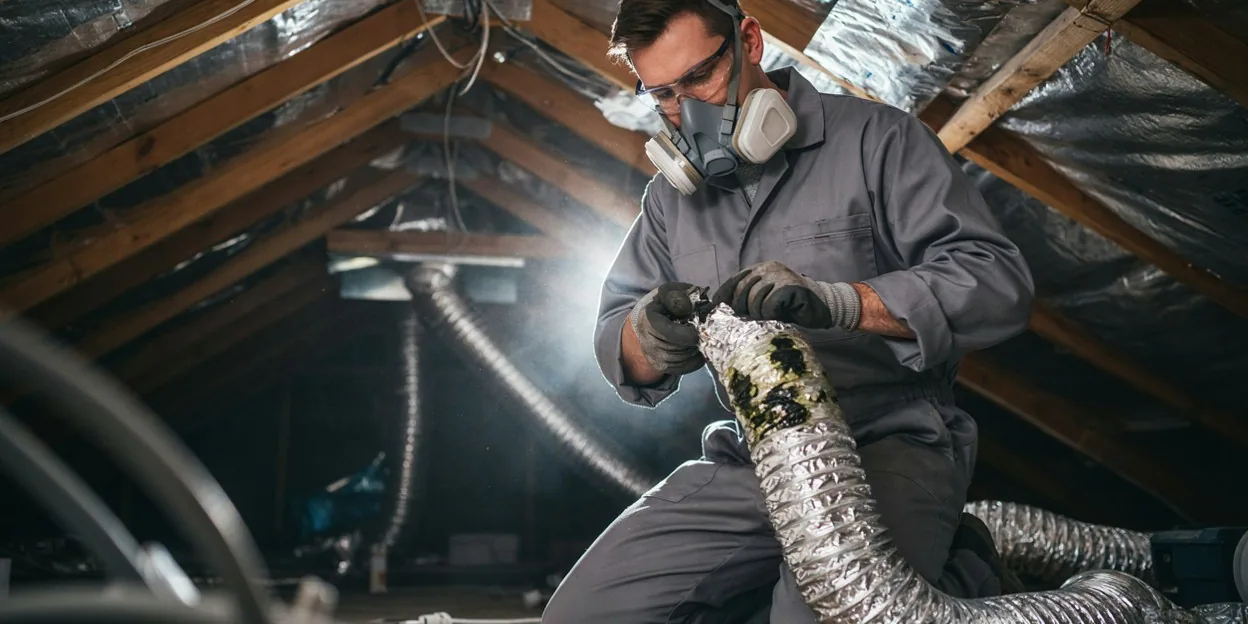
The house smells fine at seven in the morning. By three in the afternoon, when the air conditioner has been running since noon, there is a damp-towel smell in every room, and the supply grilles in the bedrooms have a gray fuzz along the vanes. The air handler is in the hall closet, and the drain pan under it has a quarter inch of standing water. This site connects you by phone with an independent local provider who does HVAC mold cleaning in Lakeland and across Polk County.
Opening the closet before anyone sprays a vent
Spraying a deodorizer into a return is the wrong first move, and the crew does not make it. The first visit opens the air handler cabinet and looks at the coil, the blower, the drain pan, and the insulation inside the cabinet. Then they follow the supply trunk into the attic, open a few runs of flex duct, and look at the boots behind the grilles.
What they are sorting out is where the growth lives. A coil and a pan are metal and plastic and can be cleaned. Fiberglass duct board and the liner inside flex duct are porous, and once they have grown mold they come out. The crew tells you which parts of your system fall into which group before the work starts.
Set the fan to auto and find the drain line outside
Set the thermostat fan to auto instead of on, so the blower stops pushing air across the wet coil between cooling cycles. Find where the condensate line comes out of the house, usually a short PVC pipe near the outdoor unit, and see whether it is dripping. If it is dry while the system runs, the line is clogged and the pan is filling.
Do not pour anything down the line or spray anything into the grilles. Take photos of the grilles, the pan, and the cabinet if you can open it, and note which rooms smell worst.
Metal and plastic cleaned, porous liner replaced, line cleared
The coil is cleaned, the pan is emptied and cleaned or replaced, and the condensate line is cleared and, if it has been clogging, fitted with a float switch that shuts the system off before the pan overflows. The inside of the cabinet is HEPA vacuumed and wiped. Duct board plenums and flex duct runs that show growth are replaced rather than cleaned, because the growth is in the fibers.
If the drain pan has already soaked the platform and the closet floor, that part becomes mold removal with the closet under containment. A dark patch on the ceiling under the closet is black mold removal. Supply runs that have been sweating onto attic insulation are attic mold remediation. A smell that stays after the system is clean is mold odor removal, and the crew traces it to wet material elsewhere.
Nine months of cooling, algae in the line, and closet air handlers
Lakeland's cooling season runs from March into November, and from June through September the air coming into the return carries enough moisture that the coil drips all day. The condensate line that empties into the yard grows algae in that heat, and a line that clogs in August fills the pan in an afternoon. Most houses here from the 1950s through the 1990s put the air handler in a hall closet or the garage, often on a wooden platform, and the city's Lakeland Water Utilities keeps the service area under water-shortage restrictions in dry years, so a drip line running into the landscape is easy to miss.
Oversized systems make it worse. A unit that cools the house in ten minutes and shuts off never runs long enough to pull the humidity out, so the house sits at 70 degrees and 65 percent humidity, and the ducts in a hot attic sweat on the outside too. Florida licenses mold remediators as a separate trade under Chapter 468, Part XVI; the provider represents its own license, and work on the refrigerant side of the system is a mechanical contractor's job that the crew coordinates rather than performs.
Calling about a system that smells in Lakeland
Have the address, where the air handler sits, whether the pan has standing water, and which rooms smell worst. Say when the system was last serviced and whether the condensate line has clogged before. Call (863) 375-7712.